
Longest 0% intro
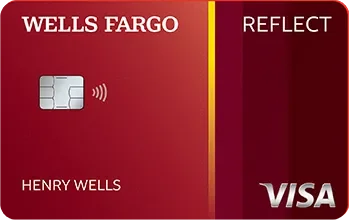
Wells Fargo Reflect Card
$0
Unpack Money score: 86/100
Verified Nov 8, 20260% for 21 months on purchases AND balance transfers with no annual fee — the longest runway we verified, plus $600 of cell phone protection.
Home / Credit Cards / Best Balance Transfer Credit Cards
Credit Cards · All terms verified November 8, 2026
A credit card balance transfer moves existing card debt onto a new card at 0% APR for up to 21 months — a genuine interest-free window to pay it down. But the headline hides three costs: the transfer fee (3–5% of the balance), the deadline to complete transfers (often just 4 months), and what happens if you miss a payment. We verified every intro period, fee, and condition on this page against the issuer's own website on October 5, 2026. Card offers change frequently, so confirm the current terms before you apply.
The right card depends on your plan. Moving a large balance once? Minimize the transfer fee. Need the longest runway? Maximize the intro months. Worried about slipping? Pick the card with no penalty rate. We unpack which card fits which plan.
How we make money: Unpack Money may receive compensation when you click certain links or apply for products through our site. Compensation may affect where products appear, but it does not determine our editorial evaluations. Learn more
Longest 0% intro
$0
Unpack Money score: 86/100
Verified Nov 8, 20260% for 21 months on purchases AND balance transfers with no annual fee — the longest runway we verified, plus $600 of cell phone protection.
Best transfer fee
$0
Unpack Money score: 85/100
Verified Nov 8, 202621 months at 0% on transfers with a reduced 3% intro transfer fee — the cheapest way to move a large balance, if you act within 4 months.
Lowest ongoing APR
$0
Unpack Money score: 84/100
Verified Nov 8, 202621 billing cycles at 0%, then the lowest ongoing APR range we verified — and no penalty APR if life happens.
Most forgiving
$0
Unpack Money score: 84/100
Verified Nov 8, 202618 months at 0% with no late fees ever and no penalty rate. The transfer card for people who want the safety net built in.
| Card | Intro APR | Transfer fee | Annual fee | Our score |
|---|---|---|---|---|
| Wells Fargo Reflect Card | 0% for 21 months | 5% ($5 min) | $0 | 86/100 |
| Citi Diamond Preferred Card | 0% 12 mo purchases / 21 mo transfers | 3% ($5 min) intro, then 5% ($5 min) | $0 | 85/100 |
| Citi Simplicity Card | 0% for 18 months | 3% ($5 min) within first 4 months, then 5% ($5 min) | $0 | 84/100 |
| Bank of America BankAmericard Credit Card | 0% for 21 billing cycles | 5% | $0 | 84/100 |
Terms verified 2026-11-08 from each issuer's official site. Card offers change frequently — confirm before you apply.
Almost never. None of the four cards compared on this page offers a fee-free transfer, and genuinely no-fee offers — when they appear at all — are usually limited-time promotions from smaller issuers or credit unions, not standing offers from major banks. If an ad promises a balance transfer with no fee at all, read the terms before you count on it.
The cheapest verified routes on this page are the 3% intro fees: the Citi Diamond Preferred and the Citi Simplicity charge 3% (with a $5 minimum) on transfers completed within the first 4 months, rising to 5% after that. The Wells Fargo Reflect and the BankAmericard charge a flat 5%. On a $10,000 transfer, that is $300 versus $500.
A fee is not automatically a bad deal. At a 24% APR, a $10,000 balance costs about $200 a month in interest — so a 5% fee pays for itself in under three months, and a 3% fee in about six weeks. The honest comparison is the fee versus the interest you avoid: our research breaks down what carrying $5,000 actually costs at today's APRs, APR by APR. And if the windows themselves are new to you, start with how 0% intro APR periods actually work.
Not just a table — here's how to choose, who should walk away, and our verdict.
| Aspect | Wells Fargo Reflect Card Verified Nov 8, 2026 | Citi Diamond Preferred Card Verified Nov 8, 2026 | Citi Simplicity Card Verified Nov 8, 2026 | Bank of America BankAmericard Credit Card Verified Nov 8, 2026 |
|---|---|---|---|---|
| Best for | Anyone needing the longest possible 0% runway with no fee | Large balance transfers where the 3% intro fee beats 5% | Balance-transfer planners who want no late fees ever | Transfer planners who want the lowest ongoing APR and no penalty rate |
| Cost | $0 annual fee · 0% intro APR for 21 months on purchases and qualifying balance transfers (within 120 days) | $0 annual fee · 0% intro APR for 12 months on purchases and 21 months on balance transfers | $0 annual fee · 0% intro APR for 18 months on purchases AND balance transfers | $0 annual fee · 0% intro APR for 21 billing cycles on purchases and balance transfers made within 60 days |
| Main advantage | 21-month 0% intro on purchases and transfers | 21-month 0% on balance transfers | 0% for 18 months on purchases and transfers | Lowest ongoing APR range verified (from 15.24%) |
| Biggest drawback | 5% balance transfer fee (no reduced intro fee) | All transfers must complete in the first 4 months | No rewards and no welcome bonus | 5% balance transfer fee |
Match the card to your timeline, not the headline. Need the maximum 21 months? Wells Fargo Reflect — but the 5% fee stings, so Citi Diamond Preferred's 3% intro fee wins for large balances you'll move fast. If you might not finish in time, BankAmericard's low ongoing APR and no penalty rate is the safety net. Run the balance-transfer calculator before you apply — the fee is the whole game.
Saved comparisons live on your dashboard — in your browser only.
Unpack Money score: 86/100
The Wells Fargo Reflect offers 0% intro APR for 21 months on purchases and qualifying balance transfers — the longest interest-free window we verified — with no annual fee. Transfers must be made within 120 days of account opening to qualify.
The price of that runway is the transfer fee: a flat 5% (minimum $5), with no reduced intro rate. On a $10,000 transfer that's $500 — versus $300 at a 3% card. The math still favors the Reflect if you need the full 21 months: the extra months of 0% outweigh the higher fee for most payoff plans, but run your own numbers if you'll be done in under a year.
After the intro, a variable 17.74%, 24.24%, or 28.49% applies depending on creditworthiness — and Wells Fargo notes the tiers vary by marketing channel, so your offer may differ slightly. A $600 cell phone protection perk (pay your bill with the card) is an unusual bonus for a no-fee transfer card. No rewards, no bonus, 3% foreign fee: this card does one job, for 21 months, very well.
Terms verified 2026-11-08 from the issuer's official site: View current offer
Unpack Money score: 85/100
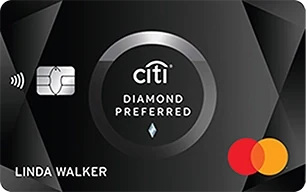
The Citi Diamond Preferred pairs 0% for 21 months on balance transfers (12 months on purchases) with the cheapest transfer fee among the 21-month cards: 3% ($5 minimum) during the intro, rising to 5% after. No annual fee.
That fee difference is the whole argument. On a $15,000 transfer, 3% costs $450 versus $750 at 5% — a $300 savings for the same 21 months at 0%. The catch is the clock: transfers must be completed within the first 4 months of account opening to get the intro terms and the reduced fee. Miss the window and you lose both the rate and the discount.
After the intro, 16.74%–27.49% variable applies. There's no rewards program and no welcome bonus — every basis point of value here is in the transfer terms. One verification note: we couldn't confirm the foreign transaction fee from Citi's rendered pages, so check before traveling with it. For a single large transfer executed promptly, this is the cheapest 21-month ride we verified.
Terms verified 2026-11-08 from the issuer's official site: View current offer
Unpack Money score: 84/100
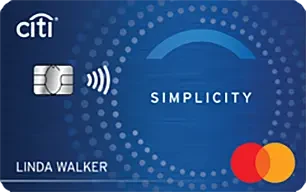
The Citi Simplicity is the transfer card for people who want the safety net built in: 0% for 18 months on purchases and balance transfers, no late fees ever, and no penalty rate — with no annual fee.
That forgiveness is unique on this page. Every other card here can punish a missed payment; the Simplicity structurally can't. The tradeoff is a shorter runway (18 months versus 21) and a transfer fee of 3% ($5 minimum) within the first 4 months, rising to 5% after. Like its Citi sibling, transfers must complete within 4 months.
After the intro, 17.74%–28.49% variable applies. No rewards, no bonus, 3% foreign fee. It's also the only card whose issuer states recommended credit in its official FAQ ("good to excellent"). If your payoff plan is solid but you want insurance against a bad month, this is it.
Terms verified 2026-11-08 from the issuer's official site: View current offer
Unpack Money score: 84/100
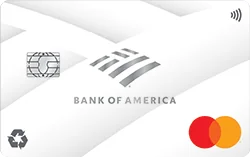
The BankAmericard is the quiet workhorse: 0% for 21 billing cycles on purchases and balance transfers made within 60 days, then a 15.24%–26.24% variable APR — the lowest ongoing range we verified — with no penalty APR and no annual fee.
Two features define it. First, the APR floor: if a balance survives past month 21, 15.24% is meaningfully cheaper than the high-teens starting points elsewhere. Second, the absence of a penalty rate: miss a payment and you won't get slammed to ~30% like some cards do. The transfer fee is 5% and the foreign transaction fee is 3% — this card stays home and does its job.
No rewards, no bonus, no frills. Note the current official URL is bankofamerica.com/credit-cards/products/bankamericard-credit-card/ (the old /bankamericard-credit-card/ address now 404s). For planners who want the cheapest "what if" — the lowest rate if the balance outlives the intro — this is the pick.
Terms verified 2026-11-08 from the issuer's official site: View current offer
Our editorial score starts with the total cost of a transfer — the intro length minus the transfer fee — then adjusts for the ongoing APR (what you pay if a balance remains), penalty policies, the transfer deadline, and the annual fee. A longer intro with a 5% fee can lose to a shorter intro with a 3% fee on large balances; we do that math. Every fact is verified against the issuer's official site and date-stamped. Read our full rating methodology.
Every fee, bonus, earn rate, and APR on this page was verified against the issuer's official website on the date shown. We never use aggregator sites as sources for card terms.
Comparison
8 accounts compared on verified APYs, fees, and fine print.
Compare →Comparison
5 cards compared on earn rates, bonuses, and fees.
Compare →Comparison
5 cards compared on bonuses, credits, and fees.
Compare →Comparison
7 lenders compared on verified APRs, origination fees, and fine print.
Compare →Comparison
8 insurers compared on verified terms, coverage ranges, and ratings.
Compare →Comparison
4 services compared on verified pricing, features, and fine print.
Compare →Comparison
4 CRMs compared on verified pricing, free plans, and scaling costs.
Compare →Comparison
4 builders compared on verified pricing, free plans, and selling tools.
Compare →Comparison
4 services compared on verified package pricing and what's included.
Compare →Comparison
5 platforms compared on verified pricing; ADP RUN and Paychex Flex are quote-only.
Compare →Comparison
3 processors compared on verified 2026-10-28 rates; Helcim excluded pending verification.
Compare →